
 Send Inquiry

 Send Inquiry
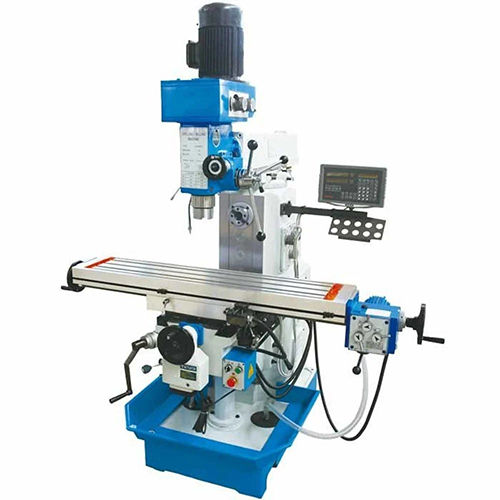
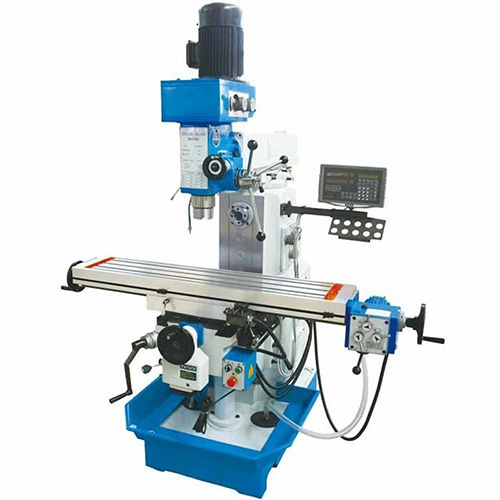
Horizontal And Vertical Milling Machine
Price 470000 INR/ Piece
Horizontal And Vertical Milling Machine Specification
- Condition
- New
- Table Size
- 1500*320 mm
- Product Type
- Horizontal And Vertical Milling Machine
- Power
- ( Vertical ) 1.5 kw, ( Horizontal ) 2. kw Watt (w)
- Power Source
- Electric
- Weight (kg)
- 1500 Kilograms (kg)
- Dimension (L*W*H)
- 1900x1720x1750 Millimeter (mm)
Horizontal And Vertical Milling Machine About
Horizontal Milling Machine:
A horizontal worktable and a shaft positioned horizontally characterise a horizontal milling machine. The cutting tool, which is usually a hollow and revolving shaper, is fixed to a horizontal arbour. The workpiece is placed on the worktable and is movable in all directions, including side to side, to allow for cutting at varied angles. Large and complicated pieces are usually delivered by horizontal milling machines, which are suitable for hard core tasks.
Vertical Milling Device:
Both the shaft and the worktable of a vertical milling machine are positioned vertically. The cutting tool, which is often a face plant or an end factory, is fixed to a vertical shaft that can be adjusted in order to adjust the depth of the cut. The workpiece is secured to the worktable and moved horizontally while taking precise measurements into account. Typically, vertical milling machines are used for tasks requiring a high degree of accuracy, such creating intricate and surprising designs.
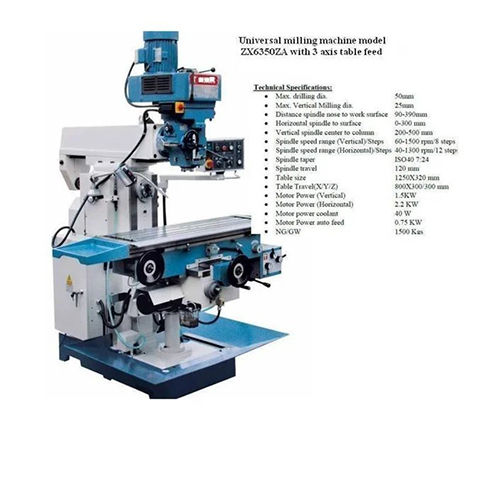
| Automation Grade | Automatic |
| Table Size | 1500*320 mm |
| Weight | 1500 kg |
| Warranty | 1 yr |
| Spindle Taper | ISO-40 |
| Dimension Mm | 1900x1720x1750 |
| Distance vertical spindle to table | 90-390 mm |
| Distance horizontal spindle to tab | 0-360 mm |
| Distance spindle to column | 200-500 mm |
| Spindle speed range | ( Vertical ) 72-1800 (8 steps),40-1300 (12 steps )( Horizontal ) |
| Vertical drilling dia | 25 mm |
| Distance horizontal spindle to arm | 175 mm |
| Spindle travel | 120 mm |
| Motor power auto feed | 0.75 kw |
| Max. drilling dia | 50 mm |
| Motor power. | ( Vertical ) 1.5 kw, ( Horizontal ) 2. kw |
| Table auto feed speed | X/Y : 22-555, Z : 300 |
| Table travel ( X/Y/Z ) | 900/280/360 |
Features ofHorizontal And Vertical Milling Machine:
FAQs ofHorizontal And Vertical Milling Machine:
Q: What is a horizontal milling machine?
A: A horizontal milling machine has a horizontally situated shaft and worktable. The cutting device is mounted on a horizontal arbor and is utilized for different machining tasks.
Q: What is a vertical milling machine?
A: A vertical milling machine has a vertically situated shaft and worktable. The cutting instrument is mounted on a vertical shaft and is utilized for accuracy errands and many-sided cuts.
Q: What are the benefits of a horizontal milling machine?
A: Horizontal milling machines are reasonable for rock solid machining, are equipped for eliminating material rapidly, and can oblige huge workpieces.
Q: What are the upsides of a vertical milling machine?
A: Vertical milling machines are known for their accuracy, flexibility in handling mind boggling cuts, and simplicity of arrangement for different tasks.
Q: What sorts of tasks can be performed with these machines?
A: Both horizontal and vertical milling machines can perform errands like confronting, opening, penetrating, shaping, and more, contingent upon the sort of cutting devices utilized.
Q: Which type is better for creating mind boggling shapes and subtleties?
A: Vertical milling machines are by and large more qualified for delivering multifaceted shapes and subtleties because of their accuracy and capacity to control the profundity of the cut.
Q: How are workpieces situated on these machines?
A: In a horizontal milling machine, workpieces are situated on the worktable and moved horizontally. In a vertical milling machine, workpieces are cinched to the worktable and moved horizontally while the cutting device moves vertically.
Q: Are there any security safeguards while utilizing these machines?
A: Wellbeing precautionary measures incorporate wearing suitable individual defensive hardware (PPE), guaranteeing legitimate device and workpiece clipping, and following appropriate working techniques.
Technical Details
Versatile Milling Performance
Equipped with both horizontal and vertical spindles, this milling machine enables you to perform a wide spectrum of machining operations. The dual-motor setup accommodates differing power needs, allowing straightforward transitions between varied milling tasks, boosting productivity and precision in every project.
Robust Build Quality
Weighing in at 1500 kg and constructed from high-strength materials, this machine is engineered for longevity and consistent operation. The dimensions (1900x1720x1750 mm) reflect a solid yet compact design, ensuring stability during intensive cutting processes while maximizing workshop floor space.
Optimized for Professional Use
Crafted for industrial applications, the generous table size (1500x320 mm) and new condition of the machinery ensure it meets current performance standards. Its electric drive enhances reliability, making it suitable for continuous use in demanding environments by exporters, manufacturers, suppliers, and traders.
FAQs of Horizontal And Vertical Milling Machine:
Q: How does the horizontal and vertical milling function benefit industrial applications?
A: The dual-functionality offers flexibility, enabling users to perform a broad range of machining tasks without needing separate machines. This increases productivity and reduces setup times in industrial environments.Q: What materials can this milling machine process effectively?
A: With its powerful 1.5 kW vertical and 2 kW horizontal motors, the machine can efficiently cut a variety of materials including metals, alloys, and some plastics, making it a versatile solution.Q: Where is this milling machine best suited for use?
A: Designed for workshops, fabrication units, and heavy-duty manufacturing plants in India, its size and power make it ideal for both small and large-scale industrial settings.Q: What is the typical process for operating this milling machine?
A: Operators secure the workpiece on the 1500x320 mm table, select the appropriate spindle (vertical or horizontal), set cutting parameters, and begin machining using electric power, achieving precise and repeatable results.Q: When should you choose this model over other milling machines?
A: This model is recommended when you need high precision, require both vertical and horizontal milling capabilities, and need a machine robust enough to handle heavy workloads efficiently.Q: How does the machines weight and build contribute to its performance?
A: The 1500 kg weight provides excellent stability during high-speed or heavy-load operations, minimizing vibration and ensuring smoother, more accurate milling.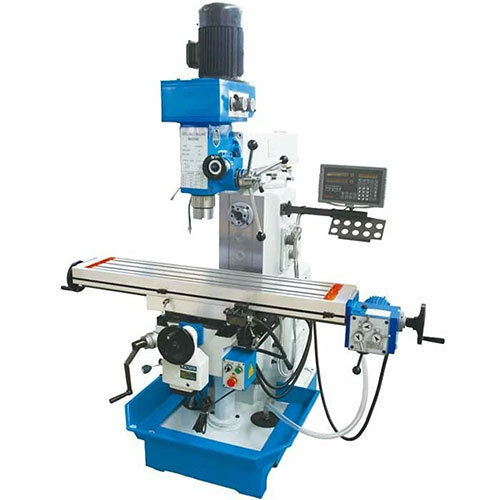

Price:
- 50
- 100
- 200
- 250
- 500
- 1000+

More Products in Industrial Machinery Category
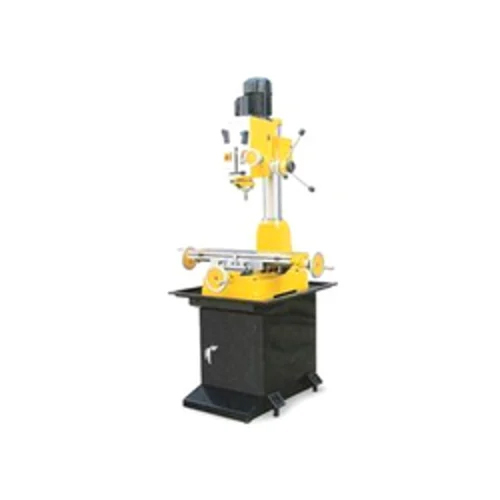
Milling Cum Drilling Machine
Price 120000 INR / Unit
Minimum Order Quantity : 1 Unit
Power Source : Electric
Product Type : Milling Cum Drilling Machine
Automatic Grade : Automatic
Weight (kg) : 270/300 Kg Kilograms (kg)
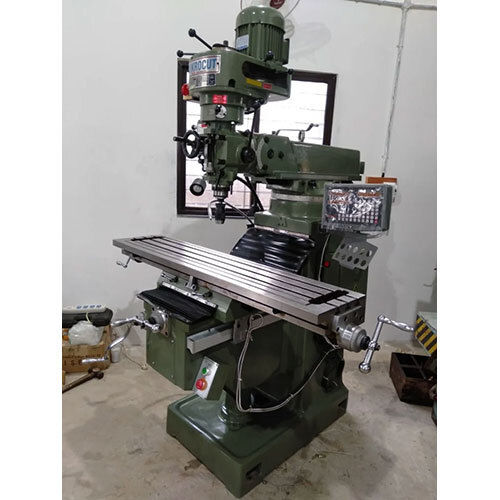
M1tr Milling Machines With Dro
Price 340000 INR / Piece
Minimum Order Quantity : 1 Piece
Power Source : Electric
Product Type : M1tr Milling Machines With Dro
Automatic Grade : Automatic
Weight (kg) : 1400 Kg Kilograms (kg)
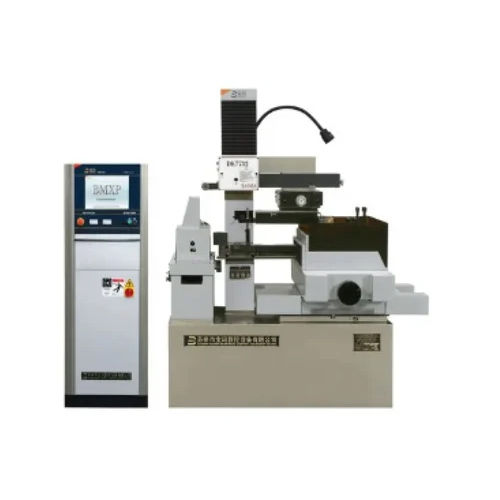
Cnc Wire Cut Edm Machine
Price 530000 INR / Unit
Minimum Order Quantity : 1 Unit
Power Source : Electric
Product Type : Cnc Wire Cut EDM Machine
Automatic Grade : Automatic
Weight (kg) : 1300 Kilograms (kg)
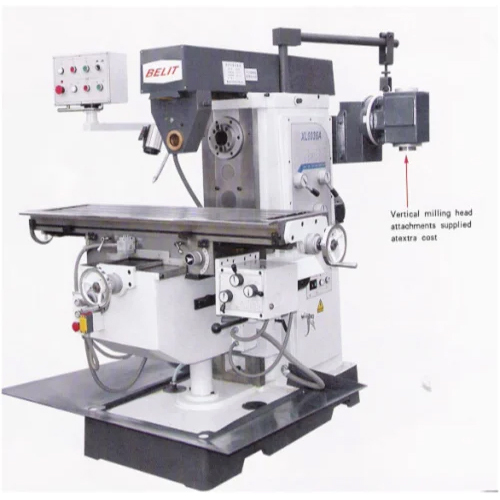
Universal Milling Machine
Price 665000 INR / Unit
Minimum Order Quantity : 1 Unit
Power Source : Electricity
Product Type : Other, Universal Milling Machine


 Send Inquiry


Our Products



 Send Inquiry
 Send SMS
Developed and Managed by Infocom Network Private Limited.
